Showing posts with label dias de los muertos. Show all posts

Wednesday, November 04, 2009

mi ofrenda

orison

Over the weekend I built an ofrenda, a shrine to my dead, littered with their pictures, artifacts and fresh flowers. Laid over a wooly black shawl from Chamula, incredulously trimmed with pink embroidery and pompoms that I found while shopping with Kathryn in that Mayan Highlands village. That she found, actually, because she asked the shopkeeper in her native dialect “are you sure you have nothing better in the back?” Kathryn’s picture was on my ofrenda too.

The ofrenda has become my annual, solitary ritual. No one in this place I live in knows my dead, so no one comes to visit and tell their stories so that our dead, dropping by, might catch up with their living. I suppose I could change that, and maybe I should, by inviting a few friends over next year. As it is, I build my ofrenda alone and I remember the ones I love. The ones I miss. There are tears but they’re the friendly tears of holding one long gone closely to fill up the hole they made when they left me.

I light the candles -- this year there were two. One held by the rough clay incensario that was used to bless my and mr. hoo's wedding ceremony in San Cristobal de las Casas. The other was in rock crystal -- a Steuben starburst-shaped candle holder that belonged to my Grama Schufmann during her life in Queens. I set out a glass of water because the dead, I’m told, are always thirsty, and I set out some food because you’re supposed to; because the apples were crisp and the pomegranate was a bright gorgeous red.

There were leaves to rake that afternoon, on the day of the dead, and because I didn’t want to leave the candles burning I blew them out before I stepped outside, promising to light them again when I returned. An ash blew off the candle wick and lofted into the water glass like a floating candle on the Ganges. The wick glowed red.

I raked my fallen leaves, piling them into tall crispy drifts in the gutter where the big trucks will soon churn by to take them away.

When I returned inside I found the candle I extinguished had spontaneously re-ignited from the remnant ember. It burned gently, fiercely. Alive.

Thursday, October 29, 2009

the dead are far too busy


bereft

The candles are lit, the copal incense is filling the air and the door stands open but there is one task remaining before the dead begin to arrive. Everyone knows that in life things change. Despite best efforts to maintain the status quo, people move. As one ages, one’s appearance changes too.

According to Enrique, from Ejutla, and Soledad, from Octlan, the dead are far too busy to keep up with all that is happening to to their living relatives and friends. “How can a dead one know to come to this house? If he goes to the place where he used to live, he’ll find strangers there. Will they treat him well? Like a relative? Perhaps not.” Others have suggested that the dead begin to lose their memories of life, and so, even if there are no changes, the dead may have trouble finding their way home for the celebration. The living recognize the dead need help.

Early in the morning of November 1, a child, ideally a young girl between the ages of seven and ten, takes a basket of marigold petals or veruche and begins to carefully scatter the petals in a narrow band. She will begin in front of the ofrenda and spread the petals to the door that connects the house to the street. The traditional families will extend this path or trail of flower petals all the way to the cemetery to ideally end at the foot of the grave or graves of the deceased who have been invited to the celebration.

This magic path now shows the way from the grave to the ofrenda and the family’s home. The assumption is that the dead can easily return to the last place they occupied on Earth, the place where they were buried. The grave acts as a homing beacon, attracting the dead to the right place. Once there, the soul follows the appropriate path to the home of his or her loved ones and he cannot get lost because of the path’s magic. I was told that the young girl who made the path is usually a relative of the deceased and that relationship between the living and the dead imparts magic to the path. It converts the thin trail of petals into a private road meant only for those dead who belonged to the living household.

From The Day of the Dead: when two worlds meet in Oaxaca by Shawn D. Haley, Curt Fukuda.


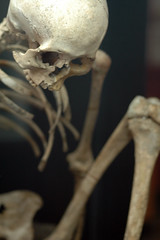
Photo: From The Skeleton at the Feast
by E. Carmichael and C. Sayer
Related Posts with Thumbnails