Showing posts with label grief. Show all posts

Tuesday, October 13, 2009

acquiring china

acquiring china

Mr. Hoo is a patient man, and not one for clutter. It took a while for the question to arise because it took a while for the cupboards to brim over with the fine bone china stuff.

It took awhile but eventually, last night, he did ask: What is all this?

I don’t know, I told him, but I think it has something to do with Grama.

I’ve been acquiring china. Twice now I’ve been married and not once did I register for the things girls register for. My china has long been a mashup of expedient pieces acquired as needed, and gifts received.

Chief among the gifts are pieces from the Noritake Angela pattern that my grandmother used when we were young. She sent it my way in the ‘90s when she acquired a complete replacement set from my aunt of something altogether different, hand me down china lush with English botanicals.

The Noritake Angela pattern is not lush.

It is simple and serene. It is to the point and appropriate for the purpose.

It is detergent proof.


Grama passed along to me a tall stack of dinner and salad plates, and an assortment of fine china tea cups. Delicate all, and most have not survived. The remnants that did were chipped and sometimes scuffed from many cuts into many steaks with the lovely scrimshaw knives that my grandparents acquired in Alaska.

Since her death I’ve been trawling eBay and acquiring pieces of the discontinued pattern. The salad plates were long gone, shattered in random incidents. They have been replaced and multiplied. As have the tiny bread and butter plates; delicate all, not bone china but bone china like, rimmed with a fine pursed lip like the English teacups I picked up in Vancouver.

I’ve opted for two pieces that I never saw in my grandmother’s collection: a platter and a serving bowl, because their scale was just right (diminutive, of another era) and the lines were simple, pure, as they should be. I’ve opted out of others -- the tidbit tray with the ornate silver handle protruding from the center, the bulbous covered casseroule dish -- because the aesthetics were untrue to what I recall of the spare mid-century modern lines that limned my grandparents’ home. That outlined my one true home.

This last weekend I chased down some saucers to give three tiny china cups a foundation to stand on, and determined that really as long as I was piecing these I should pick up three more china cups and six saucers total to add to the four complete that I already --- oh dear. Soon I can serve coffee to ten.

It is unlikely I will ever serve coffee to ten, and will instead have to explain to Mr. Hoo why the cupboard is full of sweet tiny teacups, empty boned vessels, that conjure to my grieving eye the morning steam and mist of coffee brewing in my Grama’s kitchen.

(acquired)

Sunday, August 16, 2009

please make a note of it


People who have recently lost someone have a certain look, recognizable maybe only to those who have seen that look on their own faces. I have noticed it on my face and I notice it now on others.

The look is one of extreme vulnerability, nakedness, openness. It is the look of someone who walks from the ophthalmologist's office into the bright daylight with dilated eyes, or of someone who wears glasses and is suddenly made to take them off.

These people who have lost someone look naked because they think themselves invisible.


From Joan Didion's The Year of Magical Thinking.

I haven't blogged much (at all, not since it happened) about the only thing I'm thinking about, because this blog has been so often crowded with death and dying and grieving and loss and haven't we all had enough already?

But it occupies my every thought, when I'm not chasing it to some dark corner with work or travel or chores (my house? so tidy you wouldn't believe.).

A friend said today "you should tell people that: that she was more than most grandmothers; that she was more to you," and she was. My mother left me and my stepmother didn't like me much. There was no one to mother me.

Except Grama.

She said "tell them" like it would make it hurt less; or maybe make people care more.

But people caring more will not make me feel any less alone.

"That's a lonely feeling," another friend said, when he sent condolences, and they were the truest words I've received.

Which is a long way of saying that reading Joan Didion's The Year of Magical Thinking this weekend is the first time I haven't felt so crazy or so terribly alone since the ceiling caved in.

Highly recommended if you are grieving, or have grieved, or will grieve.

Which pretty much makes it mandatory reading for everyone on the planet.

Saturday, July 26, 2008

one more for the road.


Hillside, IL

holga.

Sunday, May 25, 2008

of course.

This is the problem with cell phones
of course

They’re incompatible with passion.

Tortured whispers from the hallway
fail to transmit

The ear meant to receive
the hurried promise
of a kiss
remains cold

And this wail
My friend
Your wail

All distortion your cries funnel
through the phone
details scatter like beads broken
are lost in floorboards, beneath furniture

If I am to hear you I must tell you
Drop your voice
Go slow
Map out for me the betrayal
The discovery
Tell me again how you wonder
About your marriage
And if it is destroyed.

But I don’t.

I let the distortion drown me like a torrent
I try to catch the words
But like salt water they swallow me

(Lean your body against mine. I will try to sponge the grief that soaks through your skin but I know, I have been here, I know that the chemistry of grief will not permit osmosis. This is your child and I am here to catch her in my arms and bring her back to you. I am here to ask you, when the pain has ebbed after some time, many years maybe, and we stare at this strange creature, her weight heavy on your chest, I am here to ask you: How will you go on from here?)

Wednesday, October 03, 2007

dreams are not fictions, part 2


planning tomorrow's route
Originally uploaded by suttonhoo.
I fell asleep thinking of TD4 last night, and he was kind enough to visit me in my dreams. His memory was stirred up by a Flickr thread about grief with a friend who’s recently lost a dear old dog who she’s grieving hard. I realized then that TD4’s birthday is today; realized that it’s the second one he’s missed. Realized, again, that I miss him.

The dream was tactile and musical, the way they frequently are. The cold metal edges of the m’bira under my fingertips; the warmth of his body near mine, cross-legged the pair of us, hands on our instruments; making music with the keys and with our laughter.

We had an awkward moment when I remembered that he was dead, and I started to mention this to him. He cocked his head towards me, like he did when he was listening, and the words caught in my throat. He gave me a forgiving look, like he knew what I was going to say and rather I wouldn’t; like it would hurt his feelings if I did. So we carried on and played some more; he taught me a few chords; we repeated them endlessly.

(Our lessons were always sporadic -- they happened when he passed through town for one thing or another, and we'd usually open with my playing for him what he taught me the last time. One time he said: “I didn’t teach you that” as I played for him the tune I remembered him teaching me; I caught myself, apologized -- figured I must have remembered it wrong, been practicing it wrong, and asked him to show me how to do it right; he said “No -- you teach me -- I like that. That’s good.”)

I’m reminded by his visit of what I’ve learned to be true about grief: when it first occurs it concentrates into every pore of right now, and then as time passes it disperses, dilutes across the hours, the days, the years.

It's easy to mistake not missing someone as often for not missing someone as much. But in truth it's about density, not intensity.

That void of missing someone is like those little nurdles of plastic that never quite manage to break apart into nothingness, because when you stumble across a memory of the one who went missing, the ache and emptiness rears up true and raw and just as immediate as it did when you first tried to wrestle the news out of this now and into that then when it wasn’t true, couldn’t be true, and your world was still whole.

That then when he sat beside you and played.

Saturday, March 03, 2007

a story can never have too many shamans [1]

cloudscape


Sometimes you need to try a story out on a willing friend before you’re sure it will survive the telling. I’ve been carrying this one around with me since my return from Guatemala, and had a chance to air it out recently – I didn’t see it coming – he asked, and, after some hesitation, I spilled. It felt a little strange bringing it forward, but lucky for me my friend is a good listener and compassionate to boot, so he left me feeling like maybe there’s value to this story. Which made me think that maybe I would post it here too.

If you’ve been following detritus for any length of time, you know that 2006 was a bruiser for me. We kicked it off in high style on the first day of the new year with an email from my ex- -- received late in the night, without warning, that read:

Subject: I just got some terrible news

My Dad just called and said that he just learned that Tom Defore just died yesterday. I haven’t received any details yet from his family except that he was camping with some friends and fell off the side of a cliff at night.


dry run


I have a short list of people that I would lay my life on the line for, and TD4 was one. There’s something about losing someone you love that knocks a hole in your world – a stranger approached me at Tom’s memorial service and said exactly that. “You look like you have a hole blown right through you.” And I did.

That pretty much set the stage for the year to come.

Brillig would die next – my sweet little Russian Blue who had been with me for sixteen years. She was sick for about six months with kidney failure. My husband and I cared for her intensively with subcutaneous drips and special diets and a whole lot of loving and fussing. When she was gone there was a hole between us too.
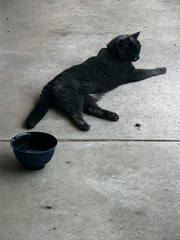
zen cat


Soon after that I would speak at an industry conference and manage to come down with a whopper of a bronchial infection. The fever started during the Q&A and continued through the follow up interviews that I did with a couple of the industry rags. Reading the articles later it was clear that I didn’t. Quite. Manage. To articulate my ideas.

I laid up in my hotel room the following day with a fever that approached 103, having canceled my plans to drive through Joshua Tree and visit my grandparents in Arizona – a drive that I was living, hoping, dreaming for. I wanted to grieve in the desert. I needed to cry. Instead I got on a plane and headed home. Returned to the job that was killing me the next Monday, continued to work 60 hour weeks and commute three to four hours a day and watch my hair fall out in big clumps from the stress.

All of this laid the stage for the pneumonia that would visit me in April, the same time an old friend came out to play. I spent the last day of her visit in bed with that fever again, and all of the next week, trying not to die.

But of course, I was aware that things were very bad, and so I did what I could to find a way through it. The job was a problem. It was fancy-pants and all that, with a great title and responsibilities, but not enough staffing or budget to do the things we needed to do in a reasonable work week. And it was killing me. So I got out.

And I started to blog. I didn’t realize it at the time, but I needed needed needed to blog. Just as I needed to Flickr. I needed to do something to wake up that sleeping part of my brain and heart that I put on hold to work excessively long weeks and make piles of money for someone else that I would never see. I needed to remember who I was and what really mattered to me. Strange how blogging can do that if you let it.

But still there was this hole.

And then Kathryn died.
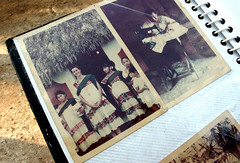
kathryn in the field


Once you’ve lived for a while with grief you forget what it’s like to live without it. It soaks into everything like a sponge, dampening your world.

The bronchial thing continued to be a problem. All year long I cycled through infection after infection after infection. In addition to the docs who gave me the pills I needed to get through it, I started to see an acupuncturist. She went to work on my lungs. She told me that in Chinese medicine it’s believed that grief settles in the lungs and causes all kinds of problems. She also said to me: “There’s an authentic sadness about you. You don’t seem depressed – depression is stuck anger – you seem really, really sad.”

And then I went to Guatemala.

As my friend said last weekend: “So it sounds like the Guatemala trip was really hard.” It was. I got sick again – more lung stuff, accompanied by the fear that the one last antibiotic available to me -- I had developed allergies to the others, in the course of my illness -- afraid too that this last one would also prove to be poison. And it was cold in the highlands. No central heating, high altitudes, not enough blankets. I shivered and whimpered and wished I was home.

The anniversary of Tom’s death was approaching, and on one day in particular, my head and heart and mind were flooded with thoughts of Tom. Not entirely accurate: they were flooded with thoughts of his death. How he died. That he died. That one small step took him away. From me. From all of us. From the rich, varied, enduring life that he lived.

Goddammit.

And I holed myself away and cried. My phlegm production was especially impressive, layered as it was on top of the infection that I was incubating.

So the stage is set: I’m fucking miserable.

Tangential to all of this I’m traveling with some really nice folks and seeing some really great things. We’re traveling with Nick, Kathryn’s husband, through country that we've traveled with them both before, which means her ghost is traveling with us. We stop in Chichicastenango and I make an offering at the central church – and I ask, please, finally, can I have a break from all this? From the grief. From the tears that live in my lungs.

On the second day of the new year we visit Iximché, a post-classic Mayan site that’s just enough beautiful to take your breath away. The sky is blue and the sun is shining and cuddly cumulous clouds float by so close that you feel you can reach and out and touch them. I lay on my back on the top of a mound for a while and imagine doing exactly that.

There’s nothing I love doing more than laying on my back and feeling the earth solid beneath me and seeing the sky high above me. I don’t know why that is, but it comforts me like no other mother.


As a group we head to the far end of the site, in the company of Luis Morales, a Mayan Shaman who has joined us for the day. We intend to have a new fire ceremony.

And so we do.


Our Shaman arranges the fire. He lays down copal incense. He has prepared herbs and grasses and sprinkled them with salt. Much of this he lays around the perimeter of what will be our fire. He lays four colors of candles to each of the four directions: North. West. South. East. In the center he sets a bundle of green and blue candles: these are for the World Tree. The Axis Mundi.


He lights the blue and green candles and we begin our prayers. We pray to the lords of the twenty days who govern the passage of time. We pray to our ancestors. We hold them in our heart and thank them for our inheritance. We acknowledge our responsibilities. We stand; we kneel. The gravel of the ground cuts into my knees. The smoke of the incense blows over me. The mountain sun shines down. I’ve taken off my hat and before the hours have passed I will be deeply sunburned. I blow my nose. I have a cold and I’m crying.

Several times we traverse the circle and add to the fire: A candle. A splash of rum. A handful of sweet-smelling herbs. I remember Tom. I remember my Bompa. I remember Kathryn. I remember Brillig. I wonder can standing in the sun and praying to the days and to the ancestors really make a difference? Either way, it’s a beautiful day, and I’m enjoying this. The focus. The intention. The voice of our Shaman. His Mayan prayers. His explanations in Spanish. And in the smoke a phrase fills my mind. It’s unexpected and it sticks, playing itself over and over, like a mantra.

How you lived; not how you left.


Later I think more about it and realize that this is what has soaked my days – not memories of the ones I’ve lost, but memories of the ways they left their lives. Thoughts of Tom slipping off the cliff. Of Kathryn collapsing in the shower. Of Brillig on the table at the vet – the fear. The life leaving her.

Thoughts of wanting to undo what is done.

But right then I just let the thought play itself in my brain, and let the tears soak my face and the smoke sting my eyes.

“Did it stick?” my friend wants to know, as I wrap up the telling for the first time. Catharsis is one thing – the misery leading up to it, the transcendent moment that results from ritual. Folks have studied it, written of it, know that it can happen.

But undoing the “how they left” is something altogether different, and replacing it with older memories, faded moments, is a difficult thing to do. Thoughts become more persistent with repetition – they wear a groove in your soul. They become part of you.

It did. It stuck.

My days are different now. The grief has a different cast. It may just be the passage of time, but the memories that run through my mind are of my friends when they were living -- not when they were dying. I can feel the flame that used to flicker inside me before the tears dampened its light. I'm not as sad. And just recently I thought of Tom, of something he said once, that was perfectly appropriate and entirely odd and insightful, just like it always was, and I laughed.

cloudscape


[1] Many thanks to b1-67er for the title of this post. And for asking.

Saturday, April 15, 2006

pesach & tenebrae


pesach
Originally uploaded by suttonhoo.
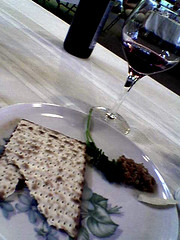
For the last few years I’ve celebrated Passover with a small group of Unitarians who grew up with some kind of Jewish heritage in their lives, or married into it. Most of the folks are humanists, in keeping with an old Unitarian tradition, and the Haggadah that’s used for the meal (changes a little every year) has a strong humanist bent.

This year the Telling focused on slavery and freedom – launching from the captivity of the Israelites in Egypt into ruminations about contemporary slavery, which is alive to this day: Figures from 2004 indicate that 27 million people are enslaved against their will. Most slaves are women and children.

Sobering.

The following night, Good Friday, we attended a Tenebrae service – another descent into the shadows. As a congregation we read together the invocation:
Fear, impatience, anger,
Resentment, doubt, greed,
You are welcome here.
We will hold you until you soften.
We will love you until you begin to melt.
We will sing to you until you remember peace.
Darkness and sadness,
Loneliness and sorrow, Come.
We know you well.
You are welcome here.
I’ve always enjoyed this time of year, the hope and optimism of Easter Sunday, the flowering of Spring. But this year, given recent events, I appreciate this darkness that comes before the sunrise even more than I have in the past. The shadows have been shouting for my attention for the last few months – and in truth I’ve tried not too look.

I don’t like it when people I love die. I don’t like when I’m leveled by a virus that weakens my body and taxes my brain. I don't like it when world news seems to be increasingly entropic. My impulse has been to look forward – up and out – moving through – an impulse to ignore the untidiness around me. But the last few days have given me an opportunity to reflect, frankly, on everything that sucks.

Not to wallow, but to reflect, here, in the dark and the gloom.

If you've ever sketched in charcoal you know what I mean: when shaping a form it's impossible to directly draw the surfaces where the light shines and reflects the brightest. The only way to show these things is to shade in the dark side of the form; it's then that the lit surfaces come into view. It's only by looking directly into the shadows that we can see things in their full dimensions.

There’s a beautiful Arabic proverb: “All sunshine makes a desert”. These dark times are the rains that, when they pass, will make the earth bloom.
Related Posts with Thumbnails