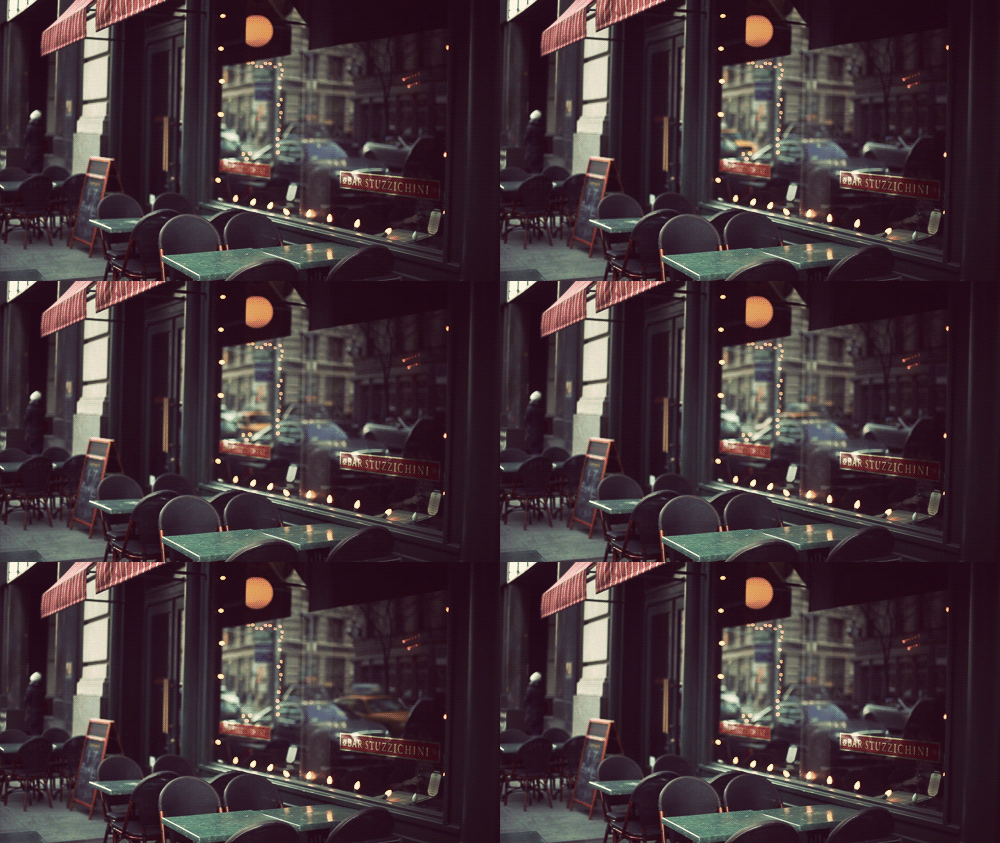
An animated gif -- or cinemagraph -- by Jamie Beck and Kevin Burg. Via Gawker »

He was more dangerous. He did things to Minnie that were not nice. I think what happened was that he became so popular – this is my own theory – they gave his cruelty and his toughness to Donald Duck. And they made Mickey a fat nothing. He's too important for products. They want him to be placid and nice and adorable. He turned into a schmaltzer. I despised him after a point.
They grabbed you and twisted your face, and they thought that was an affectionate thing to do. And I knew that my mother's cooking was pretty terrible, and it also took forever, and there was every possibility that they would eat me, or my sister or my brother. We really had a wicked fantasy that they were capable of that. We couldn't taste any worse than what she was preparing. So that's who the Wild Things are. They're foreigners, lost in America, without a language. And children who are petrified of them, and don't understand that these gestures, these twistings of flesh, are meant to be affectionate.
We finally used the cheapest store brand we could get because it popped more realistically. We didn't want all these big, fluffy kernels.
Animation functions on the border between reality and the subconscious.
Folman, a former Israeli soldier who served during the 1982 Israeli-Lebanese war, has repressed his memories of the invasion of Beirut — more specifically, the massacre of Palestinian civilians at the Sabra and Shatila refugee camps. Though the killings were committed by the Christian Phalangist militia as payback for the murder of their leader, Bashir, the Israeli army stood by and reportedly sent up flares to aid the slaughter of men, women and children. In the years since, Folman cut off ties to the men he served with. The movie is his attempt to make some kind of sense of what happened by interviewing those involved.